Are electronic signatures
legal in the UK?
Short answer: for most everyday documents in England and Wales, yes. A typed name or an image of your signature on a PDF can be a valid signature. The exceptions are documents with special formalities, like deeds that need a witness and wills.
Updated By Alina Bohuslavska, maker of eSign
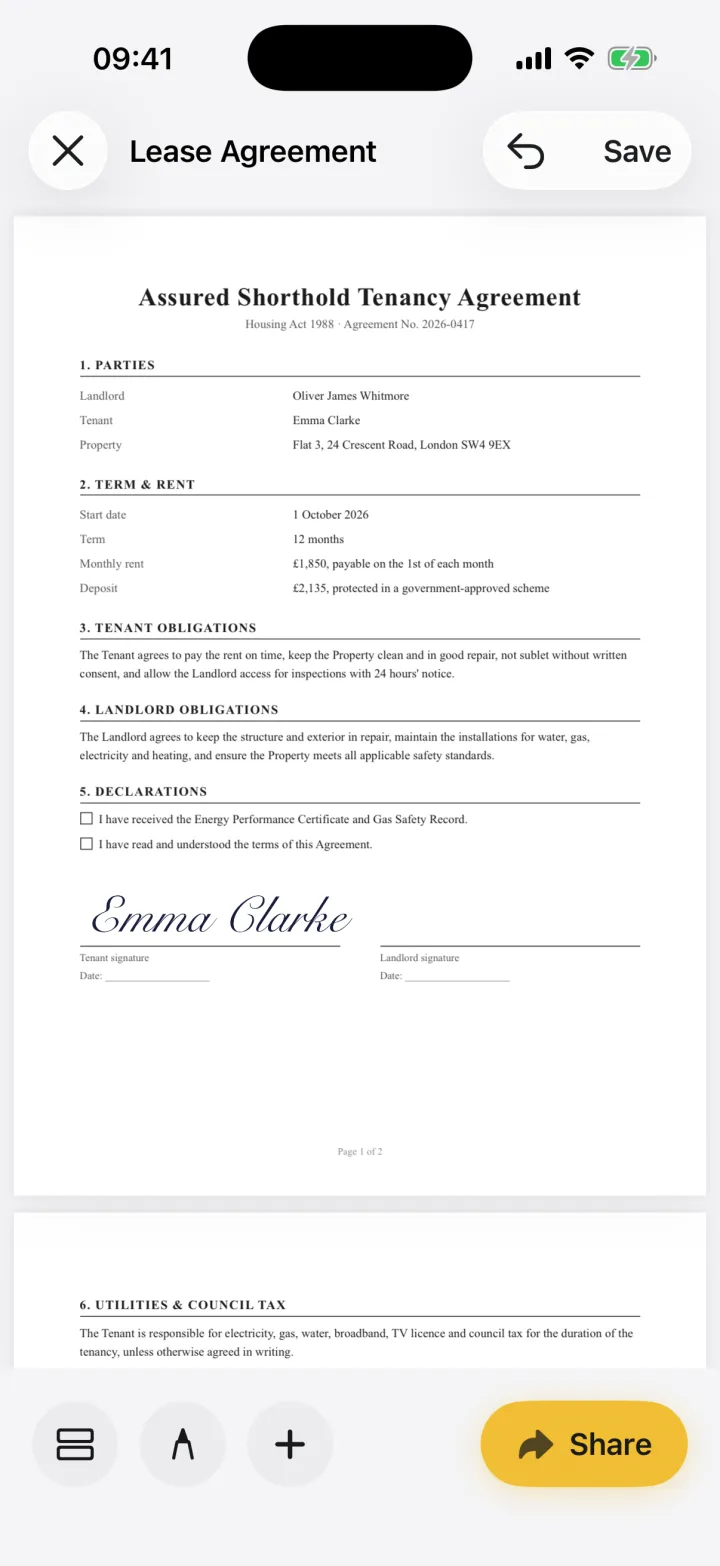

In England and Wales, an electronic signature can validly sign most documents, including contracts, as long as the signer intends to authenticate the document and any required formalities are met (Law Commission, 2019). Electronic signatures are admissible in evidence under the Electronic Communications Act 2000. Wills, witnessed deeds and Land Registry documents have extra requirements.
What the law says
Section 7 of the Electronic Communications Act 2000 makes electronic signatures admissible in evidence in legal proceedings.
In 2019 the Law Commission reviewed the position in its report Electronic execution of documents. It concluded that an electronic signature can be used to execute a document, including a deed, provided the person signing intends to authenticate the document and any formalities for that type of document are satisfied. The courts take a pragmatic approach: a typed name, a clicked box or an image of a handwritten signature can all count.
Documents that need more than a simple e-signature
- Deeds: must be signed in the physical presence of a witness who then attests the signature, even if both sign electronically.
- Wills: the Wills Act 1837 doesn't provide for electronic wills. The Law Commission recommended allowing them in May 2025, but that hasn't become law.
- Land Registry documents: HM Land Registry only accepts conveyancer-certified electronic signatures made through an approved platform.
- Scotland: documents that legally must be in writing need an advanced electronic signature, so a simple image or typed name isn't enough for those.
Making your e-signature hold up
If a signature is ever disputed, the question is who applied it and whether they meant to sign. Keep the email thread in which the document was sent and returned, and the signed PDF itself. For important documents, check that the other party accepts electronic signatures before you sign.
eSign creates simple electronic signatures: your drawn, typed or scanned signature placed on the document. It doesn't verify identity or add a certificate, which is fine for most tenancy agreements, NDAs, offer letters and everyday contracts.
General information, not legal advice. Laws change; check with a solicitor for important documents.
Sources
Common questions
Can I sign a tenancy agreement electronically in the UK?
Generally yes. Most assured shorthold tenancy agreements are simple contracts that can be signed electronically. A lease that must be made by deed (typically over three years) needs a witness present.
Is a typed name a valid signature in the UK?
It can be. The Law Commission found that a typed name can be a valid electronic signature if the person intended it to authenticate the document.
Can I sign a will electronically in England?
Not currently. Electronic wills have been recommended by the Law Commission but are not yet allowed.
Keep reading
Ready when the
next one lands.
Free to try · No account needed