Are electronic signatures
legal in the US?
Short answer: yes, for most contracts and everyday documents. Two laws do the work: the federal ESIGN Act and the Uniform Electronic Transactions Act (UETA), which almost every state has adopted. Wills, family law documents and a short list of formal notices are the main exceptions.
Updated By Alina Bohuslavska, maker of eSign
Yes. Under the federal ESIGN Act (2000), a signature or contract can't be denied legal effect just because it's electronic, and state UETA laws say the same. An electronic signature can be a typed name, a drawn signature or an image of your signature, as long as you meant to sign. Wills, adoption and divorce papers, court documents and certain notices are excluded.
Federal law: the ESIGN Act
The Electronic Signatures in Global and National Commerce Act (ESIGN, 15 U.S.C. § 7001) applies to transactions in or affecting interstate or foreign commerce. It says a signature, contract or other record may not be denied legal effect, validity or enforceability solely because it is in electronic form.
ESIGN defines an electronic signature as an electronic sound, symbol or process attached to or logically associated with a record and executed or adopted by a person with the intent to sign it. Intent is the key part: what matters is that you meant to sign, not how the mark was made.
ESIGN doesn't force anyone to accept electronic signatures. Both sides have to be willing to deal electronically, and when a law requires a business to give a consumer information in writing, the consumer must first agree to receive it electronically, after being told how to get a paper copy and how to withdraw consent.
State law: UETA
The Uniform Electronic Transactions Act was published by the Uniform Law Commission in 1999. It has been adopted by 49 states, the District of Columbia, Puerto Rico and the US Virgin Islands. Its core rule matches ESIGN: a record or signature may not be denied legal effect or enforceability solely because it is in electronic form.
New York is the one state that hasn't adopted UETA. It has its own Electronic Signatures and Records Act (ESRA), which gives an electronic signature the same validity and effect as a handwritten one.
Documents ESIGN doesn't cover
- Wills, codicils and testamentary trusts. Some states now allow electronic wills under their own rules, but most still require a traditionally signed and witnessed will.
- Adoption, divorce and other family law matters.
- Court orders, notices and official court documents such as briefs and pleadings.
- Notices of utility shut-off; default, foreclosure, repossession or eviction for a primary residence; and cancellation of health or life insurance.
- Product recall notices and documents that must travel with hazardous materials.
- Most of the Uniform Commercial Code, such as negotiable instruments and letters of credit (sales and lease contracts under UCC Articles 2 and 2A are still covered).
Making your e-signature hold up
If a signature is ever questioned, the issue is who signed and whether they meant to. Keep the signed PDF and the email thread in which it was sent and returned. Some documents, like real estate deeds or affidavits, may also need a notary; many states allow remote online notarization, but that is a separate step.
eSign creates simple electronic signatures: your drawn, typed or scanned signature placed on the document. It doesn't verify identity or add a certificate, which is fine for most leases, NDAs, offer letters, invoices and everyday contracts.
General information, not legal advice. State rules differ and change; check with a lawyer for important documents.
Sources
Common questions
Is an electronic signature legally binding in the US?
Yes, for most contracts and documents. The ESIGN Act and state UETA laws give electronic signatures the same legal effect as handwritten ones, with exceptions such as wills, family law documents and court papers.
Is a typed name a legal signature?
It can be. Under ESIGN and UETA, any electronic symbol or process counts as a signature if you adopted it with the intent to sign.
Can I sign a lease electronically in the US?
Generally yes. Residential leases are contracts covered by ESIGN and state UETA laws, provided the landlord and tenant agree to sign electronically. Eviction and default notices are an exception and may need to be on paper.
Can I sign a will electronically?
In most states, no. ESIGN excludes wills, and only some states have passed their own electronic wills laws.
Keep reading
All posts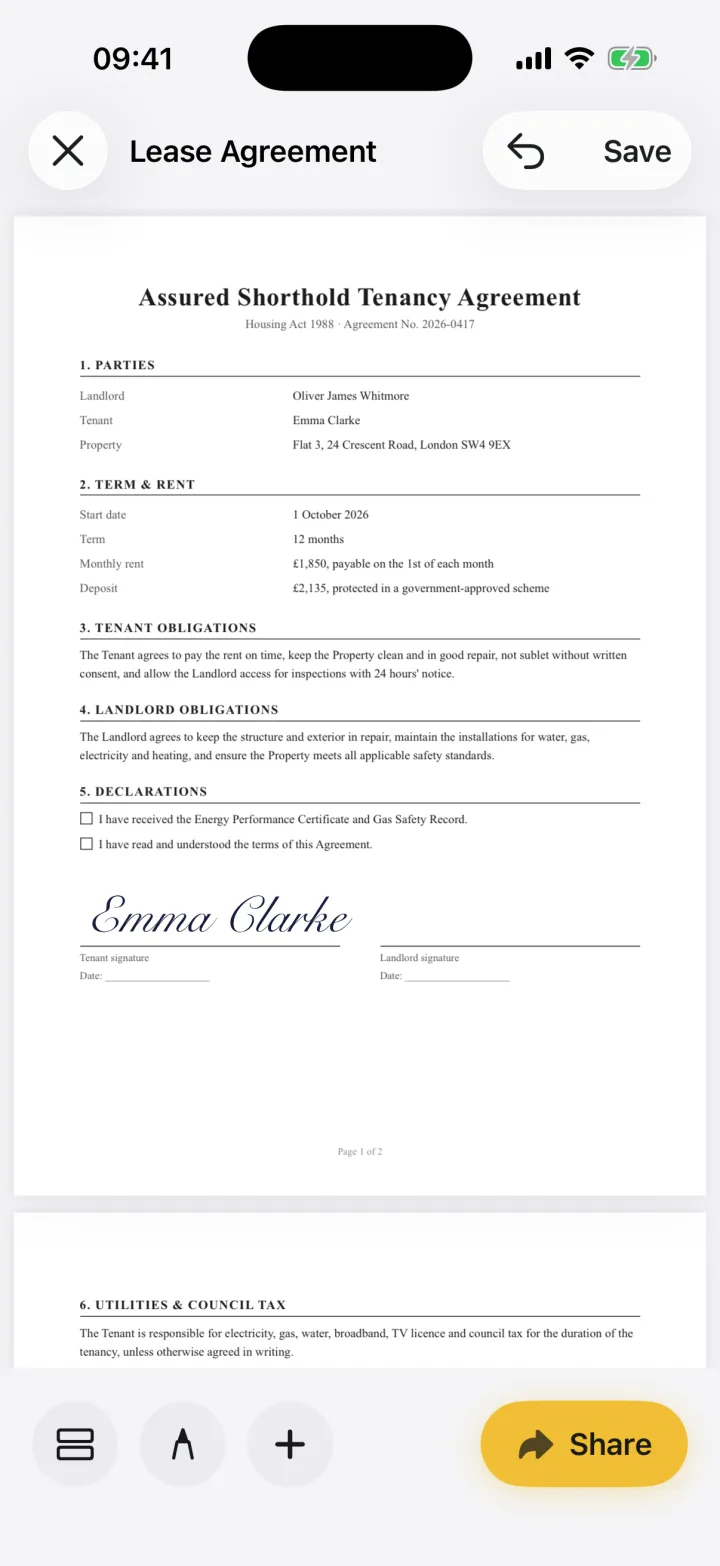 Legal & help
Are Electronic Signatures Legally Binding in the UK?
Yes, for most documents in England and Wales. What the law says, what the Law Commission concluded, and which documents still need a witness or wet ink.3 min readRead- Use case
Sign a Lease on iPhone: eSign for Landlords & Tenants
Sign tenancy agreements, inventories and renewals on your iPhone in minutes. Fill in names and dates, sign every page that needs it and send the lease back as a PDF.2 min readRead 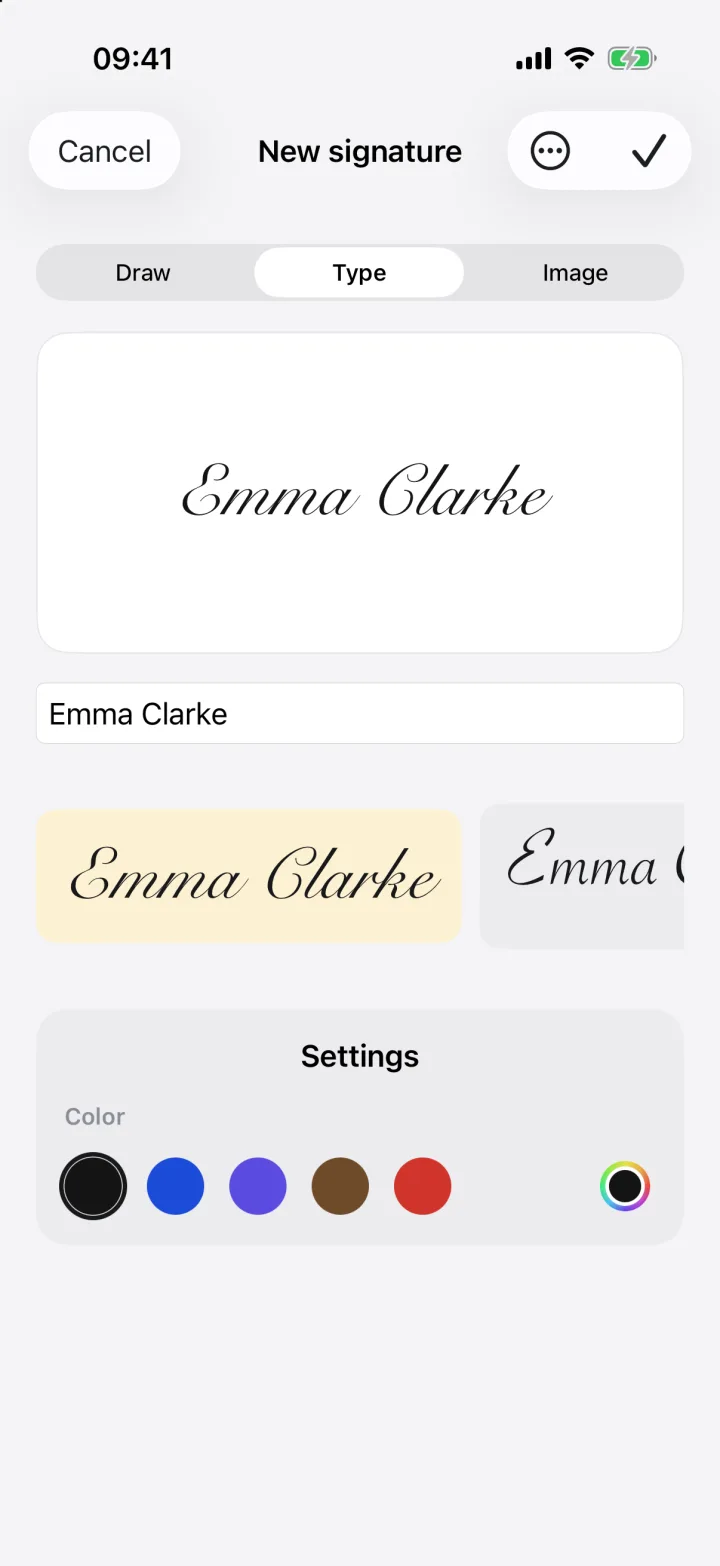 Guide
Electronic Signature App for iPhone, iPad & Mac
eSign is an electronic signature app that works on your device, with no account, and your documents are never sent to us. Sign PDFs, fill forms and send them back in seconds.2 min readRead
Ready when the
next one lands.
Free to try · No account needed